Community
Oakville and Rutherford Vineyards Expand Post-Harvest Biochar Soil Sequestration Across 1,400 Acres
UC Davis Oakville Station viticulturists and Napa Green growers convert woody vineyard prunings into porous carbon soil amendments that boost winter moisture retention.
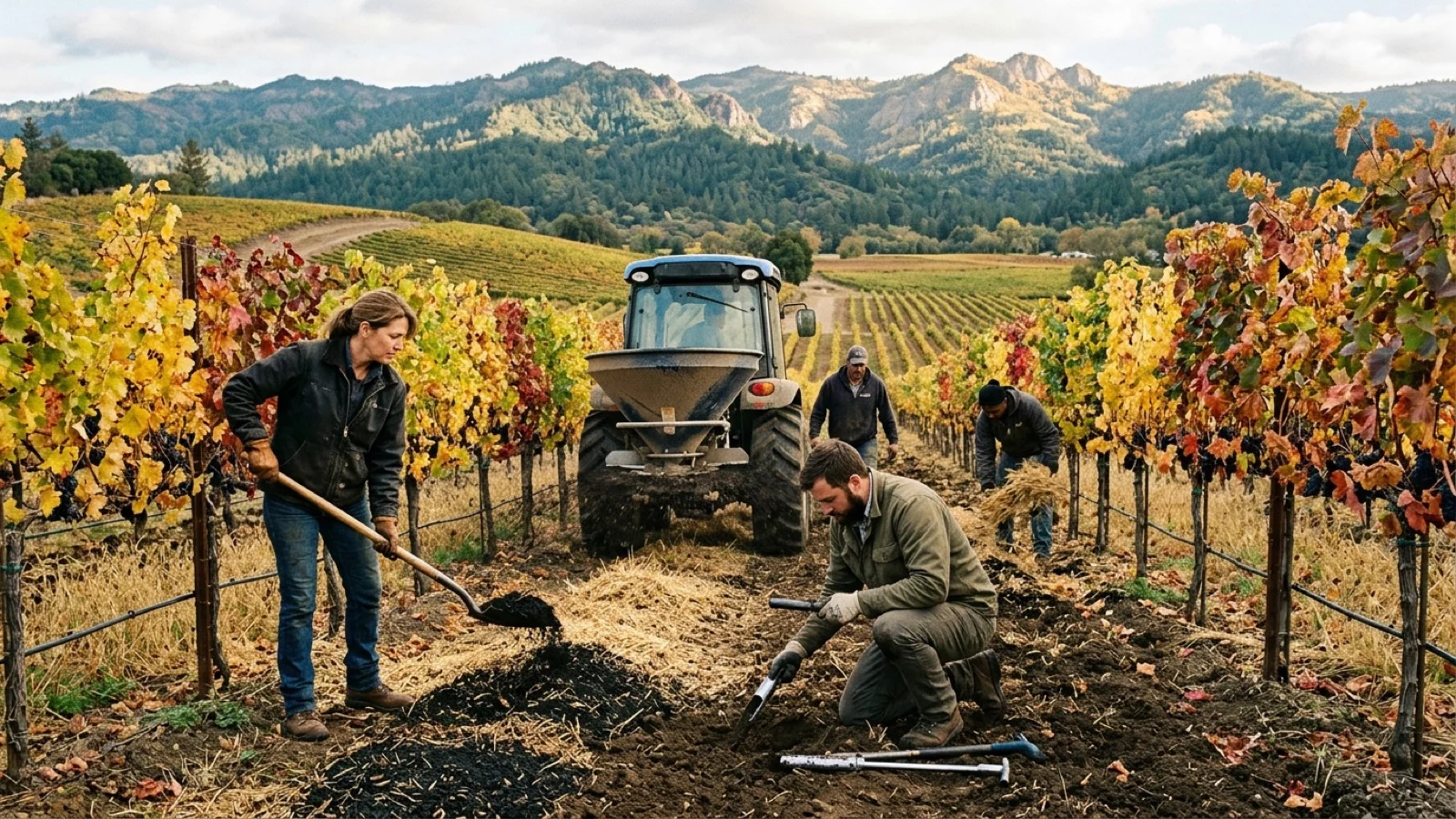
Viticulture researchers at the UC Davis Oakville Experiment Station and sustainability managers from the Napa Green certified winery coalition launched their autumn post-harvest soil carbon campaign on Friday morning along Dwyer Road and Highway 29 in Oakville, applying 850 tons of locally kiln-pyrolyzed woody biochar across 1,400 acres of Cabernet Sauvignon and Sauvignon Blanc vineyards in Oakville, Rutherford, and St. Helena. Instead of open-pile burning winter vine prunings or old trellising wood removed during vineyard replants, participating growers feed the woody biomass into mobile flame-cap pyrolysis kilns operating at 650 degrees Celsius in a low-oxygen chamber. The thermal conversion locks atmospheric carbon into a stable, honeycomb-structured charcoal matrix that resists microbial decomposition in soil for centuries.
Before spreading the material along dormantly entering vine rows, vineyard crews co-compost the raw biochar for six weeks with crushed grape pomace and cover-crop clippings from autumn winery pressings. That inoculation step charges the microscopic pores with beneficial mycorrhizal fungi and nitrogen-fixing bacteria while preventing dust during mechanical tractor banding.
Three-year neutron-probe soil moisture trials conducted by UC Davis soil physicists across gravelly Bale clay loam blocks in Oakville demonstrated that a single five-ton-per-acre biochar and compost application increases root-zone water-holding capacity by 18 percent during spring dry spells. As a result, participating estates reduced summer drip irrigation pumping by an average of 32,000 gallons per acre without altering berry phenolics or harvest brix levels.
Supported by a $620,000 California Department of Food and Agriculture Healthy Soils Program block grant administered with the Napa County Resource Conservation District, the cooperative provides subsidized mobile kiln rentals to small family-owned vineyards of under forty acres. Growers and residents can download the Oakville soil-moisture field report or register for the November 12 field demonstration on the Napa Green Regenerative Viticulture Portal.
Sources
Comments (0)
No comments yet. Be the first to share a thought on this story.